
Scientists are calling for environmental protections of space to be put in place to account for the increasing number of satellite launches. As more satellites are launched, the problem of space debris gets worse and worse, and scientists have warned this could have long-term consequences for both scientific research and the well-being of people on the ground.
The European Space Agency (ESA) also recently put out a report on space debris, mentioning that the increasing number of satellite launches, especially satellite constellations in low-Earth orbit like SpaceX’s Starlink, is creating an unsustainable impact on the space environment. According to ESA, there are more than 30,000 pieces of space debris that have been recorded in orbit around our planet, and according to models, there could be more than one million objects larger than 1 centimeter in size.
In their paper in the journal Nature Astronomy, the group of researchers warned that the accumulation of junk in orbit, such as satellites that no longer work or discarded rocket boosters, will impact a wide range of fields. As well as satellites interfering with astronomy research, the increasing amount of junk will interfere with what they call “public access to the stars” — the right of ordinary people to look up and see an unpolluted night sky. This applies to both amateur astronomers, the many groups of Indigenous people for whom the night sky is an important part of their culture, and everyone who simply wishes to enjoy the view of the stars above.
One of the major problems of space debris is that, without serious actions taken soon, the issue will continue to get worse due to collisions. When two satellites collide, they create thousands of pieces of debris which is smeared across their orbits — and this debris can create yet more collisions. The ultimate danger is that we could be affected by “Kessler syndrome,” in which there is so much junk in orbit that cascading collisions make it difficult or even impossible to launch any further space missions.
The researchers argue that we should consider space through the same lens of environmentalism that we use for Earth, and take action to protect it. “We rely on the orbital space environment by looking through it, as well as by working within it,” they write. “Hence, we should consider damage to professional astronomy, public stargazing, and the cultural importance of the sky, as well as the sustainability of commercial, civic, and military activity in space.”
Related Posts
Space is becoming Bezos and Musk’s next data center site, and we have every reason to worry
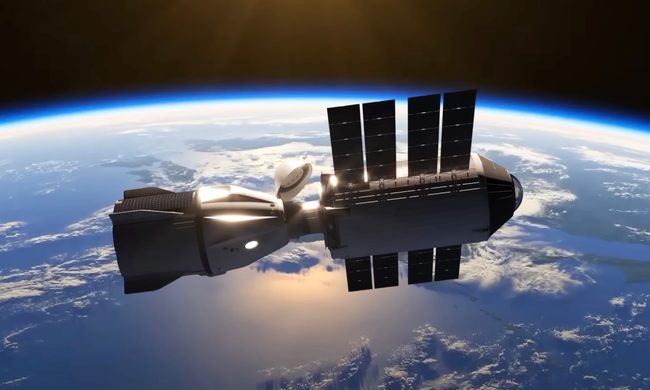
Elon Musk's SpaceX and Jeff Bezos' Blue Origin, along with several other companies, have proposed enormous constellations of satellites designed to operate as orbital data centers. However, environmental groups and former space officials are now warning that putting them into orbit at the proposed scale could have severe consequences for Earth's atmosphere and the night sky.
The first possible exomoon is here, and it makes our Moon look hilariously tiny
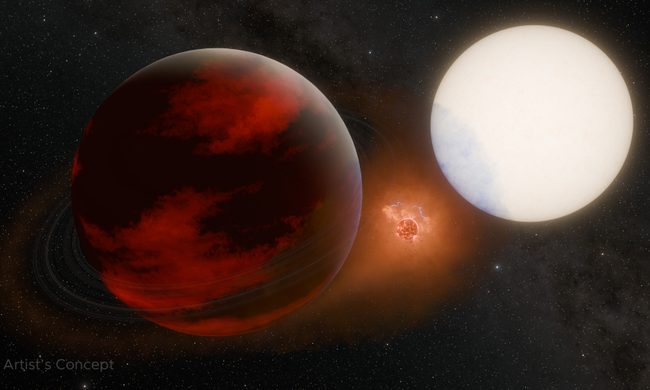
Using the European Southern Observatory’s Very Large Telescope in Chile, researchers detected strong evidence for a moon-like object in the CD-35 2722 system. Further observations are still necessary to confirm the discovery, but it could become the first confidently detected natural satellite outside our solar system. There is still one tiny complication though. This moon is apparently massive.
China’s answer to SpaceX’s reusable rockets literally catches boosters in a net

China just managed to pull off something similar, but in a slightly different way, and on July 10, it tested the method as well.