The space station just did something for the first time in its history
|
By
Trevor Mogg Published December 2, 2025 |

The International Space Station (ISS) has been orbiting Earth for the last quarter of a century.
But it was only this week that all eight of its docking ports were filled at the same time.
The spacecraft currently docked at the orbital outpost are: two SpaceX Dragons, a Cygnus XL, JAXA’s (Japan Aerospace Exploration Agency) HTV-X1, two Russian Soyuz crew spacecraft, and two Russian Progress cargo ships.
The record-breaking moment came on Monday with the reinstallation of Northrop Grumman’s Cygnus XL cargo spacecraft to the Earth-facing port of the station’s Unity module.
The Cygnus XL arrived at the station in September but briefly undocked last month to make way for the arrival of a Russian Soyuz spacecraft carrying one NASA astronaut and two Roscosmos cosmonauts.
“The Cygnus XL movement was coordinated between NASA, Northrop Grumman, and Roscosmos to provide appropriate clearance for the arriving crewed Soyuz MS-28 spacecraft on November 27,” NASA said in a post on its website.
Cygnus will stay at the ISS until at least March 2026 when it’ll depart and burn up in Earth’s atmosphere, disposing of up to 11,000 pounds of trash and unneeded cargo.
Filling up all of the station’s ports for the very first time marks the facility’s evolution into a bustling international hub for low-Earth orbit operations, and signals strong demand for future orbital infrastructure.
This is especially encouraging as the ISS is expected to end operations around 2030 due to high maintenance costs.
A number of U.S-based companies are already working on commercial designs to replace the ISS, while Russia is planning to deploy its own habitable satellite in the coming years. China already has a space station operating in low-Earth orbit.
For more on how astronauts live and work aboard the ISS, check out these insightful videos made by various visitors to the facility over the years.
Related Posts
Space is becoming Bezos and Musk’s next data center site, and we have every reason to worry
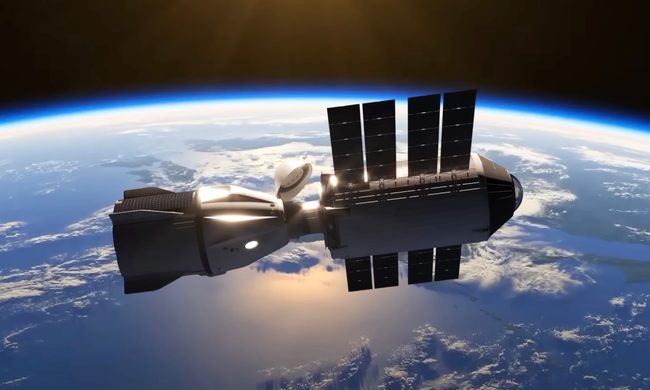
Elon Musk's SpaceX and Jeff Bezos' Blue Origin, along with several other companies, have proposed enormous constellations of satellites designed to operate as orbital data centers. However, environmental groups and former space officials are now warning that putting them into orbit at the proposed scale could have severe consequences for Earth's atmosphere and the night sky.
The first possible exomoon is here, and it makes our Moon look hilariously tiny
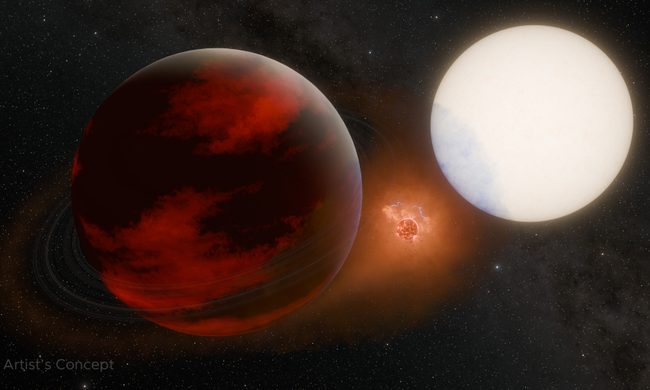
Using the European Southern Observatory’s Very Large Telescope in Chile, researchers detected strong evidence for a moon-like object in the CD-35 2722 system. Further observations are still necessary to confirm the discovery, but it could become the first confidently detected natural satellite outside our solar system. There is still one tiny complication though. This moon is apparently massive.
China’s answer to SpaceX’s reusable rockets literally catches boosters in a net

China just managed to pull off something similar, but in a slightly different way, and on July 10, it tested the method as well.