The ISS menu is about to get a lot more interesting
|
By
Trevor Mogg Published July 2, 2025 |

The first person to consume food in space was Soviet cosmonaut Yuri Gagarin, who during his brief time in orbit in 1961 had the unenviable pleasure of devouring a meal of beef and liver paste squeezed from an aluminum tube.
It sounds awful, because it almost certainly was. Over the decades, however, astronaut food has steadily improved, and while some dishes continue to require rehydration in foil packets, others actually bear some resemblance to what you might eat back on terra firma — although this sushi “meal” doesn’t really cut it.
French astronaut Sophie Adenot is one of the lucky ones. When she heads to the International Space Station (ISS) next year, she’s going to be taking with her some top-class nosh created by award-winning Michelin-starred chef Anne-Sophie Pic.
Taking a welcome break from freeze-dried scrambled eggs and powdered soups, Adenot and her ISS crewmates will get to enjoy tasty dishes such as parsnip velouté with curry and smoked haddock, onion soup with pink peppercorns and gratinéed croutons, and lobster bisque with crab and caraway — and they’re just the starters.
While most meals aboard the ISS are basic fare from cans or vacuum packs, every so often a special “bonus meal” is prepared for all of the astronauts to enjoy together, partly to help with crew bonding, and partly to give everyone a welcome break from the blander menu items.
“During a mission, sharing our respective food is a way to invite our crewmates to discover more about our culture,” Adenot said. “It’s a very special bonding moment for all of us and a welcome change in our day-to-day routine. I have no doubt they’ll be as enthusiastic as I am when they get a chance to taste Anne-Sophie’s dishes.”
When creating the one-off menu, Pic had to consider strict rules for food aboard the ISS. For example, dishes have to be solid or contained so that crumbs or small bits don’t float away in the microgravity conditions and clog up the space station’s ventilation systems.
“Cooking for space means pushing the boundaries of gastronomy,” Pic said. “With my team in my research and development lab, we embraced a thrilling challenge: preserving the emotion of taste despite extreme technical constraints.”
As NASA looks toward the first crewed missions to Mars and beyond, astronauts have also been experimenting with growing produce in microgravity, providing them with fresh food as part of a sustainable life-support system, while also boosting crew morale.
Related Posts
Space is becoming Bezos and Musk’s next data center site, and we have every reason to worry
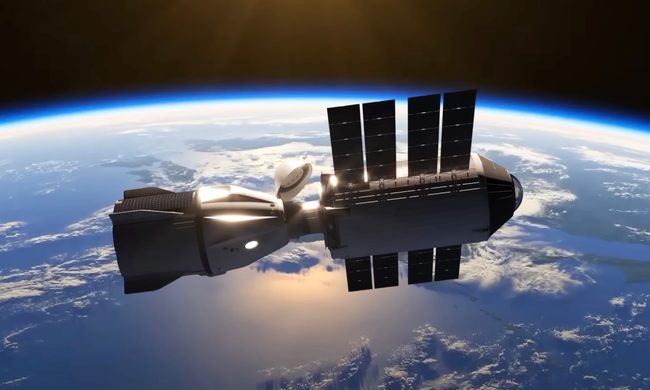
Elon Musk's SpaceX and Jeff Bezos' Blue Origin, along with several other companies, have proposed enormous constellations of satellites designed to operate as orbital data centers. However, environmental groups and former space officials are now warning that putting them into orbit at the proposed scale could have severe consequences for Earth's atmosphere and the night sky.
The first possible exomoon is here, and it makes our Moon look hilariously tiny
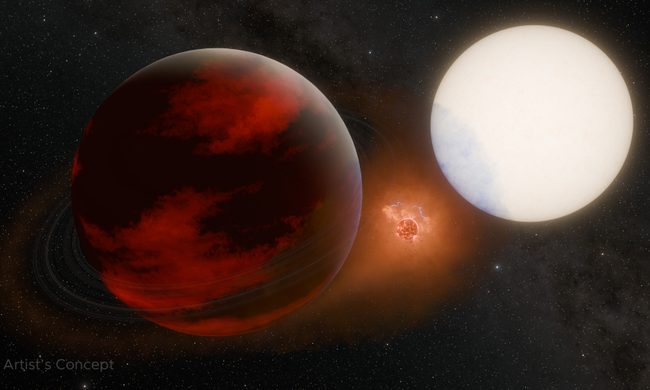
Using the European Southern Observatory’s Very Large Telescope in Chile, researchers detected strong evidence for a moon-like object in the CD-35 2722 system. Further observations are still necessary to confirm the discovery, but it could become the first confidently detected natural satellite outside our solar system. There is still one tiny complication though. This moon is apparently massive.
China’s answer to SpaceX’s reusable rockets literally catches boosters in a net

China just managed to pull off something similar, but in a slightly different way, and on July 10, it tested the method as well.