SpaceX just launched a newly designed spaceship to ISS
|
By
Trevor Mogg Published September 14, 2025 |

SpaceX has successfully launched a newly designed Cygnus spacecraft to the International Space Station (ISS) in the CRS-23 mission.
The launch of Northrop Grumman’s Cygnus XL spaceship carrying cargo for the ISS departed from Space Launch Complex 40 (SLC-40) at Cape Canaveral Space Force Station in Florida on Sunday evening.
You can watch the Falcon 9 rocket blasting off the launchpad in the video below:
A short while later, the Cygnus XL spacecraft was on its way:
About eight minutes after launch, the first-stage of the Falcon 9 rocket landed at Landing Zone 2 (LZ-2) at Cape Canaveral.
This was the fourth flight of this particular first-stage booster, which previously launched Ax-4, Crew-11, and a Starlink mission. In line with SpaceX’s reusable spaceflight system, the booster can now be refurbished and launched again on future missions.
The Cygnus XL will berth with the space station at 6:35 a.m. ET on Wednesday, September 17.
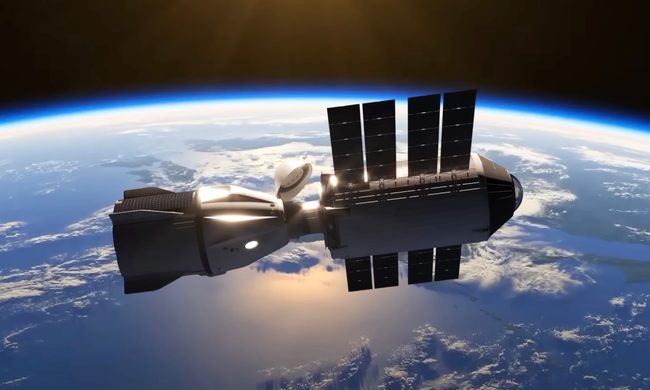
The new Cygnus XL spacecraft replaces the Enhanced version, which debuted in 2015. As its name suggests, the Cygnus XL is larger than its predecessor and can carry up to 11,000 pounds (about 5,000 kg) of supplies — that’s 33% more than the last version, which could hold 8,500 pounds (about 3,855 kg) of supplies.
“It’s really critical because we can deliver significantly more science as well as we’re able to deliver a lot more cargo prelaunch, really trying to drive down the cost per kilogram to NASA,” Ryan Tinter, vice president of Civil Space Systems for Northrop Grumman, said in comments reported by Spaceflight Now.
Tinter added: “As we’re setting up for the future of commercial [low-Earth orbit], we’re trying to make sure that we’re ready with these kind of commercial and economic options to get a lot of capability and a lot of equipment into space.”
Like the previous Cygnus, the new 25.9-foot-long (7.89 meters) version does not dock autonomously, but instead is captured by the station’s Canadarm2 robotic arm and then berthed to the station’s Unity module.
The Cygnus XL can stay at the orbital outpost for up to 200 days before it departs and then disintegrates as it enters Earth’s atmosphere at high speed.
Related Posts
Space is becoming Bezos and Musk’s next data center site, and we have every reason to worry
Elon Musk's SpaceX and Jeff Bezos' Blue Origin, along with several other companies, have proposed enormous constellations of satellites designed to operate as orbital data centers. However, environmental groups and former space officials are now warning that putting them into orbit at the proposed scale could have severe consequences for Earth's atmosphere and the night sky.
The first possible exomoon is here, and it makes our Moon look hilariously tiny

Using the European Southern Observatory’s Very Large Telescope in Chile, researchers detected strong evidence for a moon-like object in the CD-35 2722 system. Further observations are still necessary to confirm the discovery, but it could become the first confidently detected natural satellite outside our solar system. There is still one tiny complication though. This moon is apparently massive.
China’s answer to SpaceX’s reusable rockets literally catches boosters in a net

China just managed to pull off something similar, but in a slightly different way, and on July 10, it tested the method as well.