
A cargo-filled spaceship is on its way to the International Space Station (ISS) following a successful launch from the Kennedy Space Center at 11:47 a.m. ET on Monday, June 5.
A SpaceX Falcon 9 rocket powered a Dragon spacecraft to orbit in the spaceflight company’s 38th launch this year. It was the fifth flight of this Falcon 9 rocket and the fourth for the Dragon, highlighting the reusability element of the company’s spaceflight system.
The clip below shows the 28th Commercial Resupply Services mission (CRS-28) getting underway on Monday.
Liftoff! pic.twitter.com/alTnpRy2Bu
— SpaceX (@SpaceX) June 5, 2023
Following stage separation, Falcon 9’s first-stage booster returned to Earth and landed on the Just a Shortfall of Gravitas droneship in the Atlantic Ocean.
Falcon 9’s first stage has landed on the A Shortfall of Gravitas droneship pic.twitter.com/AS5e7fJcQ9
— SpaceX (@SpaceX) June 5, 2023
Dragon will autonomously dock to the space-facing port of the station’s Harmony module at about 5:50 a.m. ET on Tuesday, June 6, with NASA astronauts Woody Hoburg and Frank Rubio monitoring the procedure from inside the ISS.
Live coverage of Dragon’s arrival will be shown on NASA TV, the NASA app, and the agency’s YouTube channel starting at 4:15 a.m. ET.
Once docked, the ISS crew will unload the cargo, which besides science gear also includes crew treats such as apples, blueberries, grapefruit, oranges, cherry tomatoes, and various cheeses, NASA said.
Also aboard the ISS is another pair of IROSAs (International Space Station Roll Out Solar Arrays). This will be the third set of rollout arrays launching in the SpaceX Dragon’s trunk, and once installed on the exterior of the ISS will help provide a 20% to 30% increase in power for space station research and operations, according to the space agency.
As part of work by students from York University in Toronto to advance climate monitoring efforts, the cargo also includes a camera that will observe snow and ice coverage in northern Canada.
Other research heading to the orbital outpost includes Genes in Space-10, a student-designed DNA experiment sponsored by the ISS National Laboratory, and the next generation of seeds for NASA’s Plant Habitat-03, which look at plant adaptation to the space environment.
Dragon will stay parked at the ISS for the rest of this month before returning to Earth with research and other cargo for an ocean landing off the coast of Florida.
Related Posts
Space is becoming Bezos and Musk’s next data center site, and we have every reason to worry
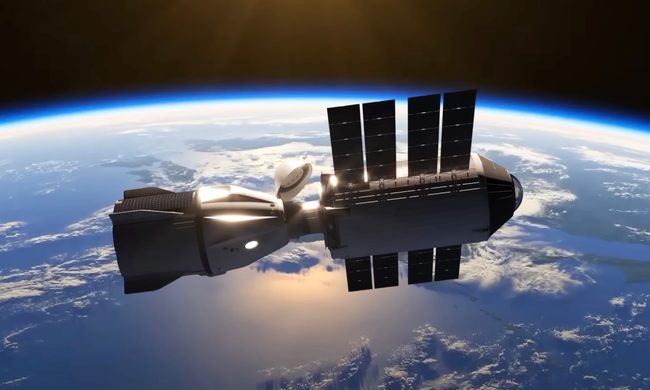
Elon Musk's SpaceX and Jeff Bezos' Blue Origin, along with several other companies, have proposed enormous constellations of satellites designed to operate as orbital data centers. However, environmental groups and former space officials are now warning that putting them into orbit at the proposed scale could have severe consequences for Earth's atmosphere and the night sky.
The first possible exomoon is here, and it makes our Moon look hilariously tiny
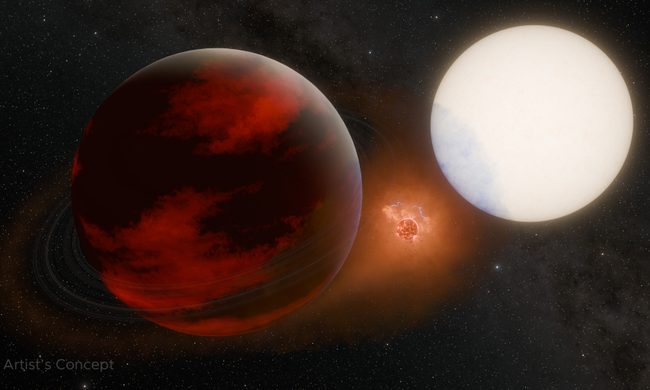
Using the European Southern Observatory’s Very Large Telescope in Chile, researchers detected strong evidence for a moon-like object in the CD-35 2722 system. Further observations are still necessary to confirm the discovery, but it could become the first confidently detected natural satellite outside our solar system. There is still one tiny complication though. This moon is apparently massive.
China’s answer to SpaceX’s reusable rockets literally catches boosters in a net

China just managed to pull off something similar, but in a slightly different way, and on July 10, it tested the method as well.