
The plan to build an underwater research habitat took a major step forward this week after the National Oceanic and Atmospheric Administration (NOAA) inked a deal with the Proteus Ocean Group to develop the facility for a 2026 deployment.
Called Proteus, the 2,000-square-foot underwater lab will seek to advance marine science, research, and education, while also seeking solutions to some of the planet’s most pressing problems, NOAA said.
The facility, dubbed the “underwater space station” for the way it will let scientists work for extended periods in a unique environment, will be located at a depth of around 60 feet off the Caribbean island of Curacao and serve as an underwater habitat for up to 12 scientists, innovators, and even private citizens who will be able to live beneath the waves while studying the ocean habitat.
Plans for Proteus were first unveiled two years ago, with the facility designed as a more modern and considerably larger version of Aquarius, a 400-square-foot submerged laboratory off the Florida Keys that went into operation in 1986.
When built, Proteus will be a circular structure attached to stilts that rest on the ocean floor. The two-story interior will feature wet and dry laboratories for an array of research and experiments, a data center, an area for hosted payloads, a hatch offering divers easy access to the ocean floor, and private suites for those staying inside the facility.
The structure will also include the first underwater greenhouse for growing food, and a state-of-the-art video production facility for live streams of the science work, presentations for students, and media interviews, in a similar way to how NASA keeps us in touch with happenings on the space station 250 miles above Earth.
The undersea laboratory will be powered by wind and solar energy, and also use ocean thermal energy conversion technology.
Fabien Cousteau, chief oceanic explorer of the Proteus Ocean Group, as well as the grandson of the legendary undersea explorer Jacques Cousteau, said the new facility will give inhabitants “unbridled access to the ocean 24/7,” adding that with NOAA’s collaboration, “the discoveries we can make — in relation to climate refugia, super corals, life-saving drugs, microenvironmental data tied to climate events, and many others — will be truly groundbreaking.”
Related Posts
Space is becoming Bezos and Musk’s next data center site, and we have every reason to worry
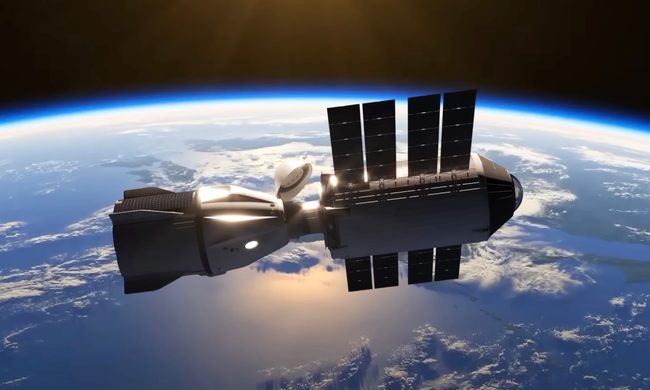
Elon Musk's SpaceX and Jeff Bezos' Blue Origin, along with several other companies, have proposed enormous constellations of satellites designed to operate as orbital data centers. However, environmental groups and former space officials are now warning that putting them into orbit at the proposed scale could have severe consequences for Earth's atmosphere and the night sky.
The first possible exomoon is here, and it makes our Moon look hilariously tiny
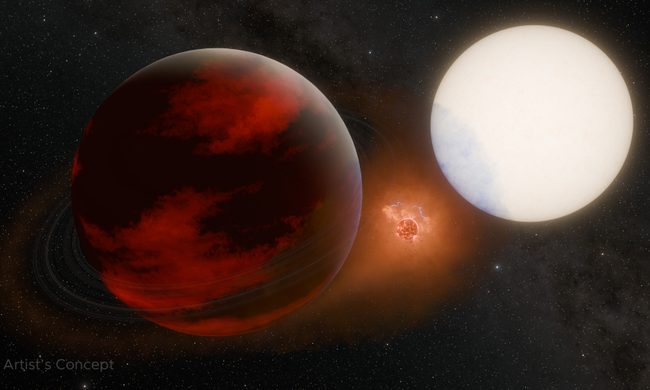
Using the European Southern Observatory’s Very Large Telescope in Chile, researchers detected strong evidence for a moon-like object in the CD-35 2722 system. Further observations are still necessary to confirm the discovery, but it could become the first confidently detected natural satellite outside our solar system. There is still one tiny complication though. This moon is apparently massive.
China’s answer to SpaceX’s reusable rockets literally catches boosters in a net

China just managed to pull off something similar, but in a slightly different way, and on July 10, it tested the method as well.