Watch SpaceX set a new record with its trusty Falcon 9 rocket
|
By
Trevor Mogg Published December 8, 2025 |

A SpaceX Falcon 9 has launched and landed a record 32 times following a successful mission on Monday night.
The Falcon 9 first-stage booster — listed as B1067 — lifted off at 5:26 p.m. ET from Launch Complex 39A (LC-39A) at NASA’s Kennedy Space Center in Florida.
Shortly after deploying 29 Starlink internet satellites to low-Earth orbit, the Falcon 9’s first stage returned to Earth, making a perfect landing on the Just Read the Instructions droneship stationed in the Atlantic Ocean just off the coast of Florida.
Here’s some footage of the rocket making its record 32nd launch and landing.
The workhorse booster made its maiden flight in June 2021 and last flew on October 19, 2025.
It previously launched CRS-22, Crew-3, Turksat 5B, Crew-4, CRS-25, Eutelsat HOTBIRD 13G, SES O3B mPOWER-A, PSN SATRIA, Telkomsat Merah Putih 2, Galileo L13, Koreasat-6A, and 20 Starlink missions.
SpaceX has a growing number of boosters making multiple flights. The reusability system is at the heart of the spaceflight company’s strategy, enabling it to drastically cut the cost of launches compared to traditional rockets that can only be used once.
Taking what it’s learned from the Falcon 9 landings, SpaceX has also managed to land the first stage of its much larger and more powerful Starship rocket, though in that case a pair of giant mechanical arms secure the booster just above the ground.
Only Blue Origin has replicated SpaceX’s feat in landing an orbital-class rocket upright minutes after launch. The U.S. company started by Amazon founder Jeff Bezos just last month successfully landed the first stage of its New Glenn rocket following a failed attempt at the start of the year.
Others want to join the elite club, but nailing the technology is a challenge. Chinese firm LandSpace, for example, recently attempted to land the first stage of its reusable Zhuque‑3 rocket but the booster exploded upon its return instead of touching down safely.
Related Posts
Space is becoming Bezos and Musk’s next data center site, and we have every reason to worry
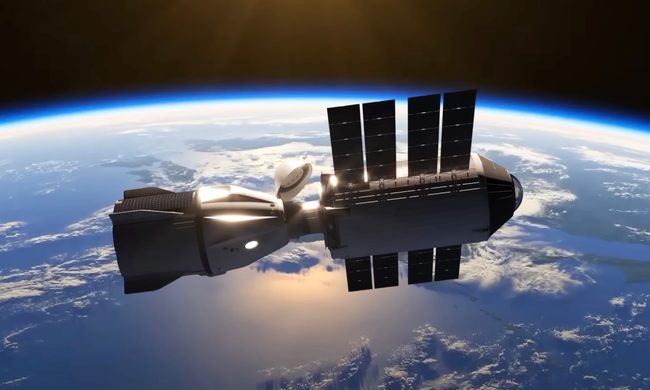
Elon Musk's SpaceX and Jeff Bezos' Blue Origin, along with several other companies, have proposed enormous constellations of satellites designed to operate as orbital data centers. However, environmental groups and former space officials are now warning that putting them into orbit at the proposed scale could have severe consequences for Earth's atmosphere and the night sky.
The first possible exomoon is here, and it makes our Moon look hilariously tiny
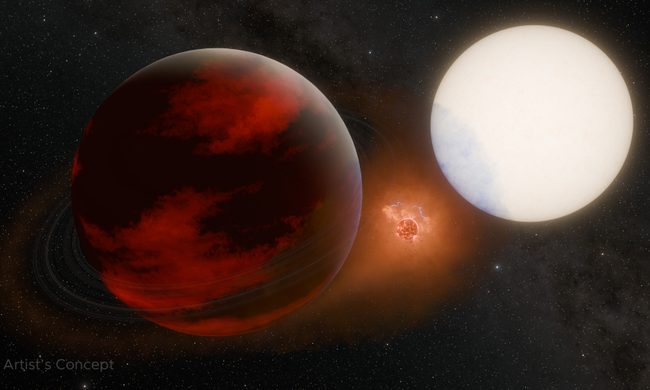
Using the European Southern Observatory’s Very Large Telescope in Chile, researchers detected strong evidence for a moon-like object in the CD-35 2722 system. Further observations are still necessary to confirm the discovery, but it could become the first confidently detected natural satellite outside our solar system. There is still one tiny complication though. This moon is apparently massive.
China’s answer to SpaceX’s reusable rockets literally catches boosters in a net

China just managed to pull off something similar, but in a slightly different way, and on July 10, it tested the method as well.