
When Apple revealed the new iPad Pro at its Spring Loaded event, the biggest news was the fact it will now use the desktop-class M1 chip instead of the previous A-series processor. As well as that, it also comes kitted out with super-fast 5G connectivity — full millimeter-wave 5G, no less. That raises an interesting question, though: Why hasn’t Apple made a 5G MacBook yet?
You may think 5G is a purely mobile technology, and that it makes most sense inside a mobile device like the iPhone 12 or the iPad Pro. Yet is a MacBook not also a truly mobile device? There are plenty of similar-sized laptops with 5G support already out on the market. Also, Apple’s maniacal quest for the ultimate thin and light laptop means the MacBook Air does not weigh much more than a 12.9-inch iPad Pro, and both are absolutely portable.
Sure, you might spend most of your time using a MacBook in your home or a coffee shop with Wi-Fi, but what about that time you visited your relatives in the backcountry with no reliable internet connection? Or when your home Wi-Fi went down and left you without a connection to (gasp) Instagram and your work Slack channel? A 5G connection would have been mighty handy back then.
In fact, the same arguments Apple uses on its website to espouse the benefits of 5G in the iPad Pro also apply to every MacBook. Stay in touch with friends and family? You bet. Browse the web? Of course. Send emails? Sign me up. Apple loves to tell us that the iPad can replace your computer, and these similar use cases would seem to imply the company is not too far off the mark. Yet if they are so alike, why does only one have 5G connectivity?
The answer cannot be the chip powering the devices, as they are now one and the same. It also surely cannot be one of space, as if Apple can fit everything inside the iPad Pro, it can definitely do the same in the larger MacBooks.
What, then, is causing the holdup? That is the million-dollar question, and like a lot of Apple mysteries, it has no obvious answer. That makes it all the more frustrating that 5G is absent from the MacBook range.
Don’t get me wrong, I’m not advocating for a SIM card slot on future MacBooks. Apple is reportedly expanding the number of ports available on the next MacBook, but a SIM card slot would be a step too far. All it needs is eSIM capability — something the iPad Pro also has, showing it is well within the realm of possibility.
Ultimately, only Apple’s top brass knows when — or if — 5G is coming to the MacBook range, and they aren’t sharing any details. For now, we will have to keep our fingers crossed.
Related Posts
Motorola may have built the iPad alternative Android users have been waiting for

The tablet will launch in India on August 8 through Flipkart. Its 12.1-inch 2.5K display, included Moto Pen, 10,200mAh battery, and 68W charging give it several features that could appeal to people considering Apple’s base iPad. However, the mid-range Dimensity 6400 processor means it is unlikely to match the iPad in raw performance.
Qualcomm is set to ratchet up chip prices in September, and your next gadget upgrade could bear the brunt
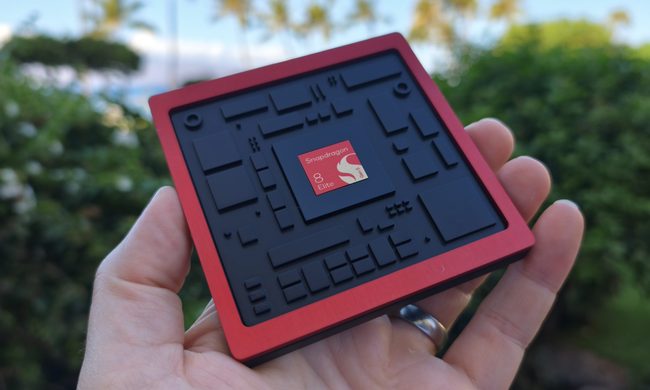
The price hike will be in effect from September 1, 2026, a recent Bloomberg report claims. Essentially, all the companies placing their chip orders after that will pay a higher price.
Stop losing your notes and start the school year with one of these e-readers that double as notebooks

One device that you can use to read books and PDFs, take notes, and keep everything organized would fix this, and that's exactly what e-readers with pen input support are built to do. And you don't need to spend what you'd drop on textbooks for a semester to get one either. I've rounded up six worth buying this back-to-school season, and I'll tell you exactly who each one is for.