
Like some kind of sadomasochistic twit, I’ve moved houses three times in the past three years. Each of these moves reintroduced me to the symptom of insanity commonly known as a large book collection. The bulk of my household’s possessions come in paperback and hardcover, you see – dozens of boxes and hundreds of pounds worth of pulp that take up more space in a moving truck than all of my furniture combined.
Superior technology has officially rendered all my reasons for sticking with paper and glue irrelevant.
My book collection is a burden – especially to my brother, Aaron, who has helped my fiancée and me move every time. Which is why, I assume, he recently asked, “So, have you thought about buying an ebook reader?” He did, and thinks it’s amazing – his physical library quickly evaporating into a digital one that he takes with him wherever he goes. “Plus,” he said, “I’m sick of carrying your heavy crap.”
Aaron, of course, has a point – one that millions of consumers realized long ago. Not only do ebooks not weigh anything or take up any space, they are also searchable, customizable, and can include a bevy of Internet-connected features. You can “borrow” ebooks from the library without worrying about return dates. And thanks to Amazon’s e-lending library, companies like Oyster – the “Netflix of ebooks” – and a slew of excellent ebook readers, perusing an endless array of titles has never been easier, cheaper, or more convenient.
So why, after all these years of having access to a superior product, haven’t I jumped on the digital book bandwagon?
The answer: I am an egotistical jerk.
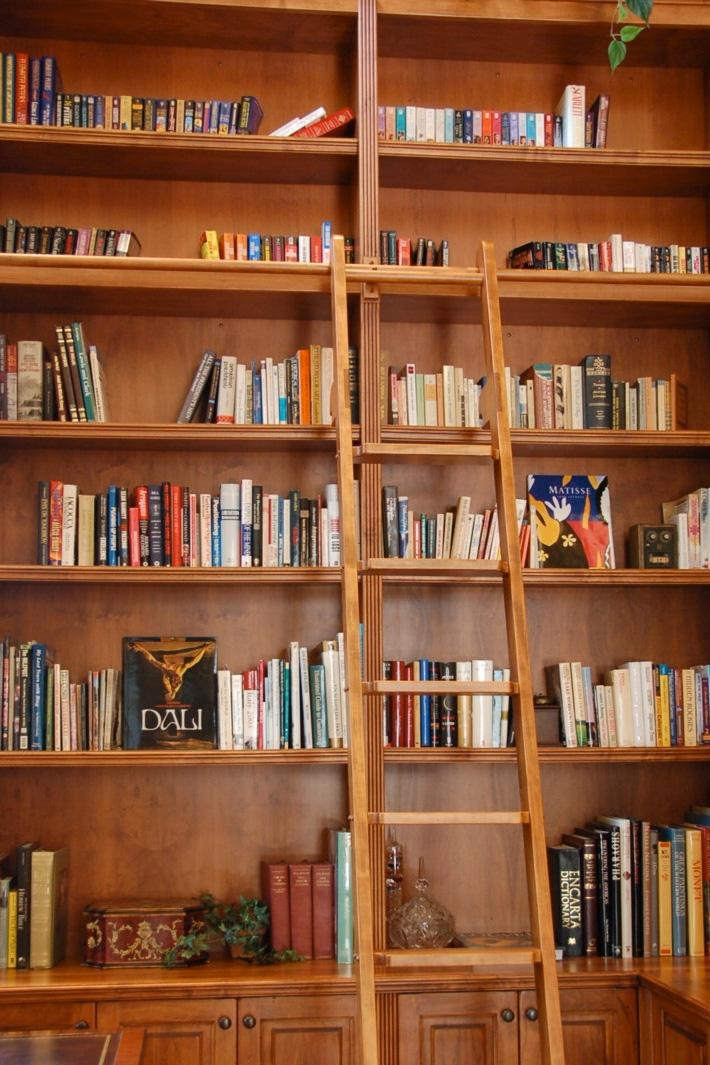 My book collection, I realized this weekend, is one of the few things in my home that makes me seem smart. Visitors step into my living room to see shelves and shelves of tomes – Hemingway, McCarthy, Kafka, Tolstoy, Franzen, Sedaris, Bukowski, Fitzgerald – each creased spine revealing more about my interests and intellect. At least, that’s what my subconscious likes to believe. Just as vacation photographs show off where we’ve been, books show where our minds have traveled. They have, in other words, become little more than an elaborate way to brag.
The same could be said for all types of media. Movie lovers no longer need collections of DVDs. CDs have long been replaced by invisible MP3s – which is one of the reasons, I assume, that vinyl has enjoyed such a resurgence in the past decade: People want you to know what good taste they have in art. Soon, as video game disks become increasingly obsolete, gamers will suffer the same fate – forced to display their outdated titles as a reminder to anyone who visits that they are a “real” gamer in the same way I am a “real” reader.
The “’real books’ vs. ebooks’” debate has been around for years, of course. And, unlike other types of media, there are good reasons to prefer the old medium. Paper books don’t need electricity. You can resell them or give them away without sparking a battle over copyright infringement. They can suffer a coffee spill without completely crapping out. It is impossible to get distracted by pop-up emails and other apps. Paper books can’t disappear from your library due to company policy, technical malfunction, or technology obsolescence. And no matter how handy an ebook is, its intangible nature strips its ability to evoke the sentimental memories a dingy, dog-eared paperback can elicit.
No matter how handy an ebook is, its intangible nature strips its ability to evoke the sentimental memories a dingy, dog-eared paperback can elicit.
These are some of the reasons we Luddite booklovers cite for investing in their physical libraries – either by continuing to buy more “real” books; or by investing time, money, and space into having them around. And I’m sure each old-school reader has his or her own reasons for not making the switch to digital.
Many, I’m sure, see intrinsic quality in physical things themselves, besides their resale value. Do we lose something important – some part of ourselves – by letting the products that define our lives become ethereal? Or is it our reluctance to jump on the technology train that says the most about who we are?
This bookworm is fed up with trying to answer these questions. Superior technology has officially rendered all my reasons for sticking with paper and glue irrelevant. And, if you’re an ebook holdout like me, it’ll probably do the same for us all. Meanwhile, my needy ego will just have to find another way to get its fix.
So what will it be then – Kindle, Nook, or fancy new iPad Mini?
Affinity’s new all-in-one creative app is finally coming to the iPad, nearly a year after Canva launched the redesigned desktop version for Mac and Windows. Creatives have been asking for the iPad release ever since, especially because files created in the new Affinity app cannot be opened in the older V2 iPad apps.
Affinity already has Photo, Designer, and Publisher apps on iPad, but the new release combines those tools into the same unified app that Canva launched on desktop last year.
Touchscreen laptops have been around for years. You can get them in all sizes and shapes. Just not from Apple. For years, the Cupertino giant has treated the idea of a touchscreen MacBook the way I treat a meeting that could have been an email: with open contempt. However, Wednesday looks like the day the company could finally change its mind.
The latest Apple invite puts the “Pro and Tell” showcase in Los Angeles at 10 a.m. PT (1 p.m. ET) on October 28, 2026. Instead of a regular live-streamed keynote, it is an invitation-only, hands-on event for a handful of press and creators (similar to what the company did for the MacBook Neo earlier this year).
Apple has just launched its latest iPad mini with a notable set of upgrades, including an OLED screen, improved speakers, and a more resilient build. It also gets a new chip, and the whole package costs $200 more than its predecessor. But if you look closely at Apple’s online store, you’ll realize that $699 isn’t enough to get you the most powerful version of the A20 Pro chip inside this tablet. In fact, even if you pay $800 for the 256GB model, you still won’t get the beefiest variant. Only when you jump to the 512GB trim, which costs an absurd $999, do you get the most powerful flavor of the A20 Pro.
The $999 model gets more than extra storage