
The Mobvoi TicWatch Pro 5 doesn’t have Google Assistant built-in, and you can’t separately download and install the app from the Google Play Store. It’s the latest in a line of Android smartwatches that don’t have Assistant onboard, following on from the Montblanc Summit 3 and most modern Fossil smartwatches, but it’s still a standard feature on Google’s own Pixel Watch.
Is Google holding Assistant back for its own devices? Maybe, but I’m not going to worry about it, and I definitely don’t think you should pick the Pixel Watch over the TicWatch Pro 5 due to it. Why? The Assistant on a smartwatch isn’t the selling point Google seems to think it is.
Google Assistant has its uses, but when it is so prevalent and easily accessible elsewhere, do even hardcore users ever need to speak to their smartwatch? Assistant is installed (or installable) on just about every Android phone, it’s on your Nest smart speaker, and it’s part of Android Auto — to name just a few of the opportunities to ask Assistant to help out. What’s more, it’s still pretty embarrassing to use voice control in general, and there’s very little appeal in addressing your wrist when out in public.
Assistant’s ability to search for information and present it in a legible, mostly concise way is impressive, and the underlying tech is cool in a sci-fi way. But I don’t live in a movie, and my living room is not the bridge of the Enterprise (unfortunately), so the Assistant’s more in-depth skills rarely get used at home, let alone out and about. What I use it for is the basics — timers, sending messages, and reminders — when I’m otherwise occupied, but I almost always reach for my phone if there are other people around.
Whenever I’ve used Assistant on the Pixel Watch, it doesn’t seem to do anything smartwatch-specific either. I can start a workout with my voice, which is quite helpful and does save some time, but I immediately hit that “do I really want to say this out loud” barrier and just silently use the Fitbit Tile instead. If I really wanted or needed to use my voice, Assistant on my phone takes the same command and works in exactly the same way.
Google Assistant is just too commonplace for it to be a feature I miss on a smartwatch, and it’s also too irritating to be something I want to use for quick tasks I can do myself. When I’ve tested Google Assistant on a smartwatch, my phone often wakes up to perform the action too, or one of my Nest speakers does the same. I only need one Assistant, not dozens of them all jostling to do my bidding. They all get similarly protective over ending a function, too, as one doesn’t always talk to another. I’m so tired of Google Assistant on Android phones interrupting or taking control instead of my smart display (or just waking to butt into a conversation) that I turn off the always-listening feature during the setup process.
Assistant irritates me often enough in other ways that I’m happy to minimize the amount of them listening. I have several Google Nest Home devices in my home, and they often get things — even the most basic, often repeated instructions — wrong. Every day I ask the speaker in my office to “Play Classic FM,” in theory prompting it to play my requested radio station through Global Player. Yet, several times a week, it will think about this for a while longer than expected and then say, “OK, check out this classic rock playlist on YouTube Music.”
Last week, it started asking to confirm which device I wanted to play music on, so I’d tell it. Not that it made any difference because it would ask me again and again, dropping me into some kind of maddening time loop. After unplugging it a few times, checking the Google Home app, and doing a few stupid tweaks I’d found in the (many) threads on Google’s forum complaining about the same problem, I gave up. I’ve found the problem has magically cured itself this week, which both pleases and infuriates me.
The way Google Assistant obstinately wants me to listen to Queen or Led Zeppelin or gleefully asks me the same question over and over again like a petulant child does not make me warm to it. When it’s this annoying in the house, why would I want to use it in public, with the added embarrassment of talking into my wrist when I do? I’m singling out Google Assistant here, but Siri, Alexa, and (shudder) Bixby aren’t much better.
Everyone has different feature requirements, and some will inevitably use Assistant a lot more than I do. But I’d be very interested to know if those faithful consider a smartwatch an essential or if the same functionality could truthfully be replicated with the always-listening Assistant on a phone. After all, the Assistant is right there. I know because it has muscled in and taken over the power button.
Personally, I have yet to find a specific reason to use Google Assistant solely on a smartwatch, and its prevalence means I never feel like I’m missing out — even if it’s not available. I’m not sad it’s not on the Mobvoi TicWatch Pro 5, and really want you to not consider it a downside on this excellent smartwatch, which is superior to the Assistant-equipped Pixel Watch in almost every other way.
Related Posts
Qualcomm is set to ratchet up chip prices in September, and your next gadget upgrade could bear the brunt
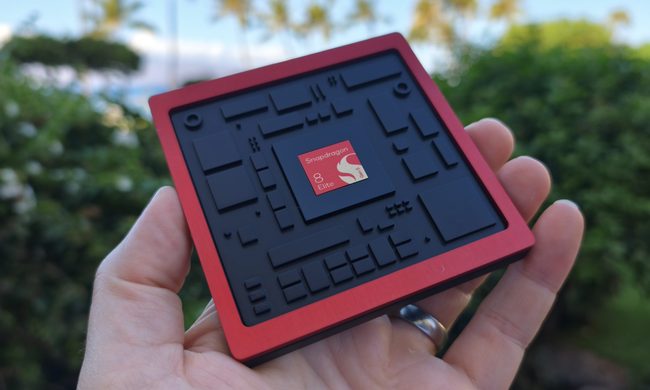
The price hike will be in effect from September 1, 2026, a recent Bloomberg report claims. Essentially, all the companies placing their chip orders after that will pay a higher price.
Slacked off all summer? Here are 3 fitness trackers that’ll help you stay accountable as you head back to school
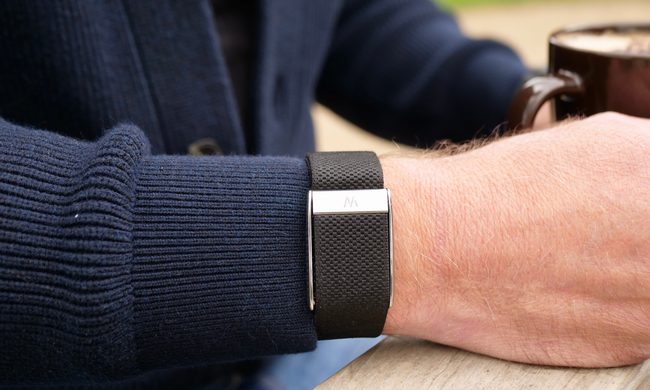
A fitness tracker won't get you off your couch. What it will do is put a number in front of you every day, one that makes it obvious whether you stuck to your goal or slacked off. That small bit of visibility is often the difference between meaning to work out and actually doing it. Back-to-school season is a good time to buy in, since you're already resetting more than one part of your routine, and the overlap makes the habit more likely to stick. To keep the odds in your favor, here are three fitness trackers that can help you stay accountable and actually hit your goals.
Galaxy Watch 9 vs. Watch Series 11: Has Apple finally met its smartwatch match?
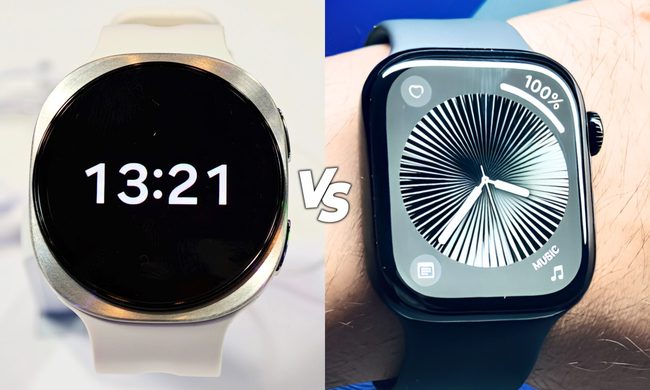
Samsung just refreshed its mainstream Galaxy Watch line with a new silicon and a batch of clinically-backed health tools, landing squarely on Apple's home turf of preventive wellness tracking. Apple, for its part, has spent the better part of a year letting its Series 11 sit as the reigning pick for anyone inside its ecosystem, propped up by a software catalog few rivals match feature-for-feature.